
Roof Rats control in San Antonio & the Hill Country
Strong climbers that use live oaks, pecans, and power lines to reach attics. Calls across North San Antonio and Castle Hills peak from fall into winter.
01 · How to identify it
Roof Rats
Rattus rattus
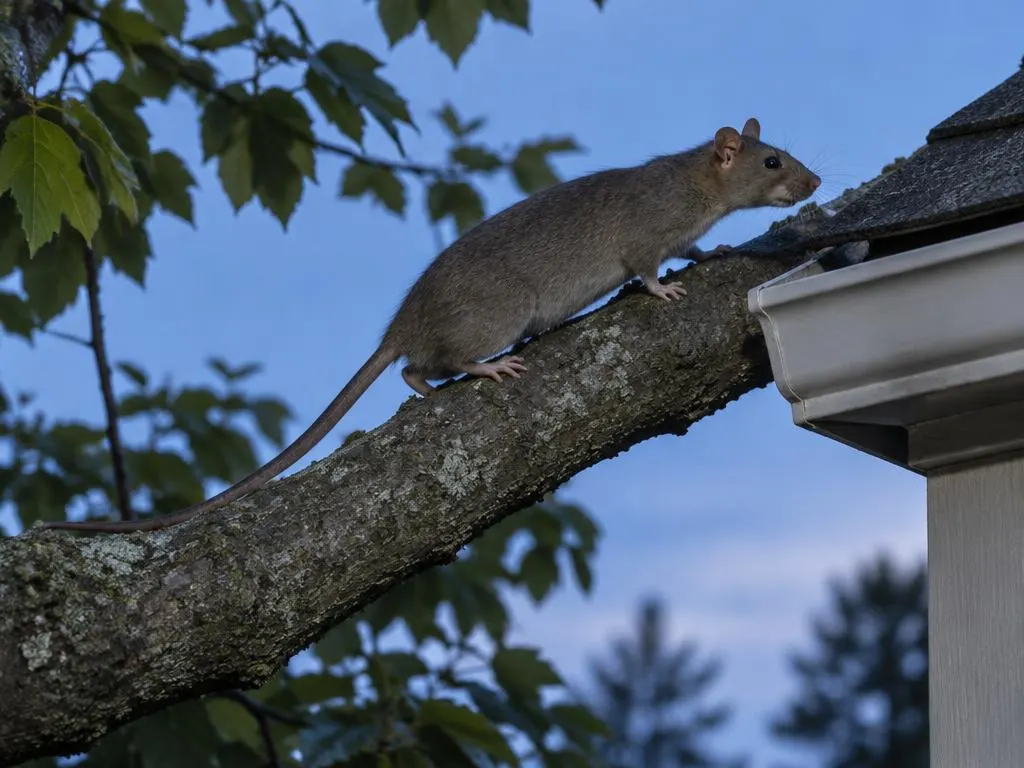
- Common name
- Roof rat, black rat
- Scientific name
- Rattus rattus
- Size
- Body 6 to 8 in, tail longer than body
- Color
- Dark brown to black with a lighter belly
- Droppings
- About 1/2 in, pointed ends
- Local season
- Year-round; indoor activity rises October through February

02 · Signs
What will you notice?
- Scratching or running in the attic at night
- Pointed droppings in attic or pantry
- Gnawed wiring and insulation
- Greasy rub marks along beams
03 · Risk
Risk to home and health
- Chewed wiring is a fire risk
- Droppings and urine contaminate insulation and food
- Can carry diseases that spread through droppings
- Damage to AC ducts and stored items
04 · What to do
What do I do about roof rats?
- 01Store pet food and bird seed in sealed containers.
- 02Trim tree limbs back from the roofline.
- 03Pick up fallen fruit and pecans.
- 04Do not sweep droppings dry. Spray them with disinfectant first and wear gloves.
- You hear noise in the attic at night.
- You find droppings or gnawed wires.
- Traps catch one but the noise continues.
“The live oaks that make North San Antonio neighborhoods beautiful are also a highway for roof rats. When I inspect an attic I start at the roofline, not the traps. Find the gap where the branch meets the soffit, the AC line, or the gable vent. That's where the problem actually gets solved.”
Robert C. LeBlanc
Entomologist · Custom Pest Control05 · Field photos
Field photos & evidence from local jobs
Real photos from jobs involving roof rats.
06 · Treatment
How we treat it
Trapping alone just makes room for the next rodent. We seal the building so the problem ends, and we document every entry point so you can see the work.
- 01 · Inspect
- 02 · Identify species
- 03 · Written plan
- 04 · Treat
- 05 · Follow-up
07 · Questions
What people ask us.
How do I know it's rats and not squirrels?+
Rats are mostly active at night; squirrels in the early morning and evening. Droppings and entry size also differ.
How small a gap can a rat use?+
A roof rat can squeeze through an opening about the size of a quarter.
Will they leave on their own?+
Rarely. Once they find food, water, and a warm attic, they stay and breed.
Do you clean the attic too?+
Ask about cleanup when you request a quote. We will note contamination during the inspection.


